A step-by-step guide to planning a private, tailor-made Sri Lanka journey.
The best Sri Lankan trips are planned personally, not assembled from a template. What follows is the process we use with every traveler who comes to us — a short, honest guide to how a genuinely good itinerary comes together.
Start With Shape, Not Detail
Before hotels or highlights, we start with four simple questions: how long can you travel for, what season do your dates fall into, and what kind of trip is this — honeymoon, family holiday, solo journey, photography-led escape? The answers to these determine almost everything that follows, including which coast the trip should end on.
Choose Your Chapters
Almost every Sri Lanka itinerary is built from three chapters — culture, hills, coast. A shorter trip picks two; a two-week trip comfortably includes all three; a longer journey can add a specialist chapter, whether deep wildlife, wellness or culinary. We build these chapters at a genuinely unhurried pace, with two-night minimums almost everywhere and three where the location deserves it.
Then the Hotels
This is where specialist knowledge matters most — knowing which tea-country bungalow suits a particular travel style, which Yala camp performs best in June versus December, which Galle Fort villa has the balcony that catches the evening light. These decisions shape the daily experience far more than the headline itinerary does.
Add the Small, Elevating Details
- A private ramparts dinner inside Galle Fort
- A helicopter transfer to save a long driving day
- A temple visit led by a scholar rather than a standard guide
- The right chauffeur guide, matched to the traveler's pace and interests
Leave Room
Every itinerary we build reserves at least one unplanned day — a floating morning, an open afternoon — because the best moments of a Sri Lankan trip are almost never the ones fixed on the calendar in advance.
If you are starting to think about your own trip, we would be glad to talk through how this process might apply to your dates and interests.
Working With a Specialist Versus Planning Alone
It is entirely possible to plan a Sri Lanka trip independently, and many travelers do so successfully. What a specialist adds is less about access than judgement — knowing which combinations of hotels and regions genuinely work well together, and which look sensible on a map but feel disjointed in practice once driving times and seasons are accounted for.
Revisiting the Plan as Dates Approach
A good itinerary is rarely finished the first time it is drafted. Weather patterns shift, favourite properties get booked out, and a traveler's own priorities sometimes change as departure nears. Building in a willingness to adjust the plan right up until confirmation tends to produce a better outcome than treating the first draft as final.
Common Mistakes We See in First Drafts
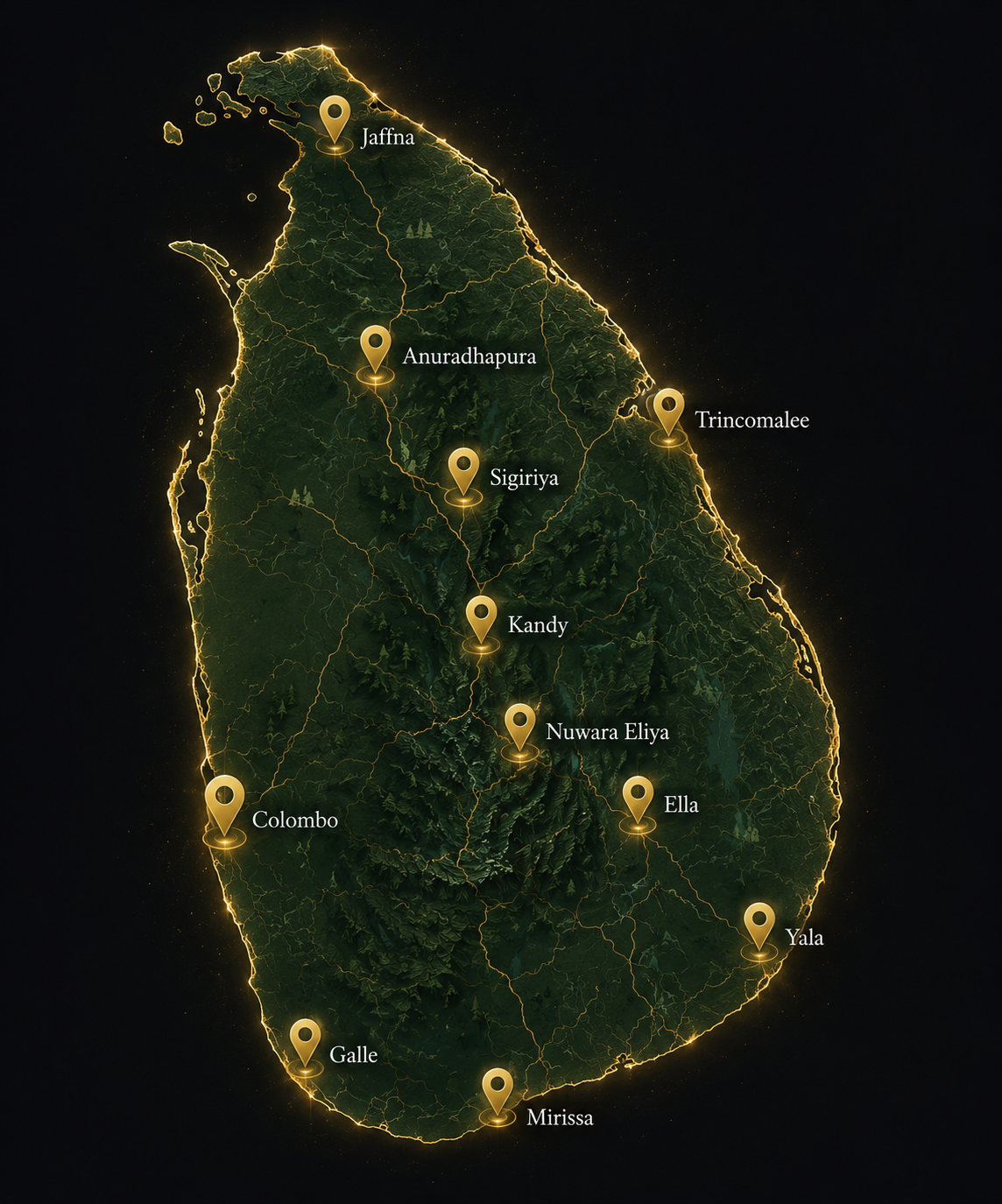
Travelers who plan independently, understandably relying on popular blog itineraries, often replicate a route built for a different traveler's priorities rather than their own — cramming in every headline site regardless of personal interest, or underestimating how much driving time genuinely separates two points that look close together on a small map. A second frequent issue is booking accommodation and activities in the wrong order, locking in a hotel before confirming a safari tracker's availability, when the reverse sequence would have preserved more flexibility.
Seasonal Timing as Part of the Process
Season is not a single decision made once at the start of planning — it should be revisited at every stage as the itinerary firms up. A route drafted for December dates might reasonably favour the west and south; if travel dates later shift to August, the entire shape of the trip, not just the packing list, should shift with it toward the east coast and away from certain hill-country activities better suited to the drier months.
What Changes When Plans Are Confirmed Close to Departure
In the final weeks before travel, our focus shifts from broad shape to fine detail — confirming specific tables for a special dinner, checking a property's current renovation status, reconfirming safari tracker availability, and building a short list of backup options for anything weather-dependent. This final pass rarely changes the overall itinerary, but it is often what prevents small disappointments once you are actually on the ground.