Experience
Whale Watching
Blue whales on a warm Indian Ocean
Overview
About thisexperience
Between November and April, the seas off Sri Lanka's south coast come alive with one of the largest animals ever to exist — the blue whale, along with sperm whales, spinner dolphins and orcas.
We work only with the most ethical operators — small boats, respectful distances, and departure times that give the highest chance of sightings without disturbing the animals. Our private charters can be tailored to families, photographers or couples seeking a quiet dawn on the water.
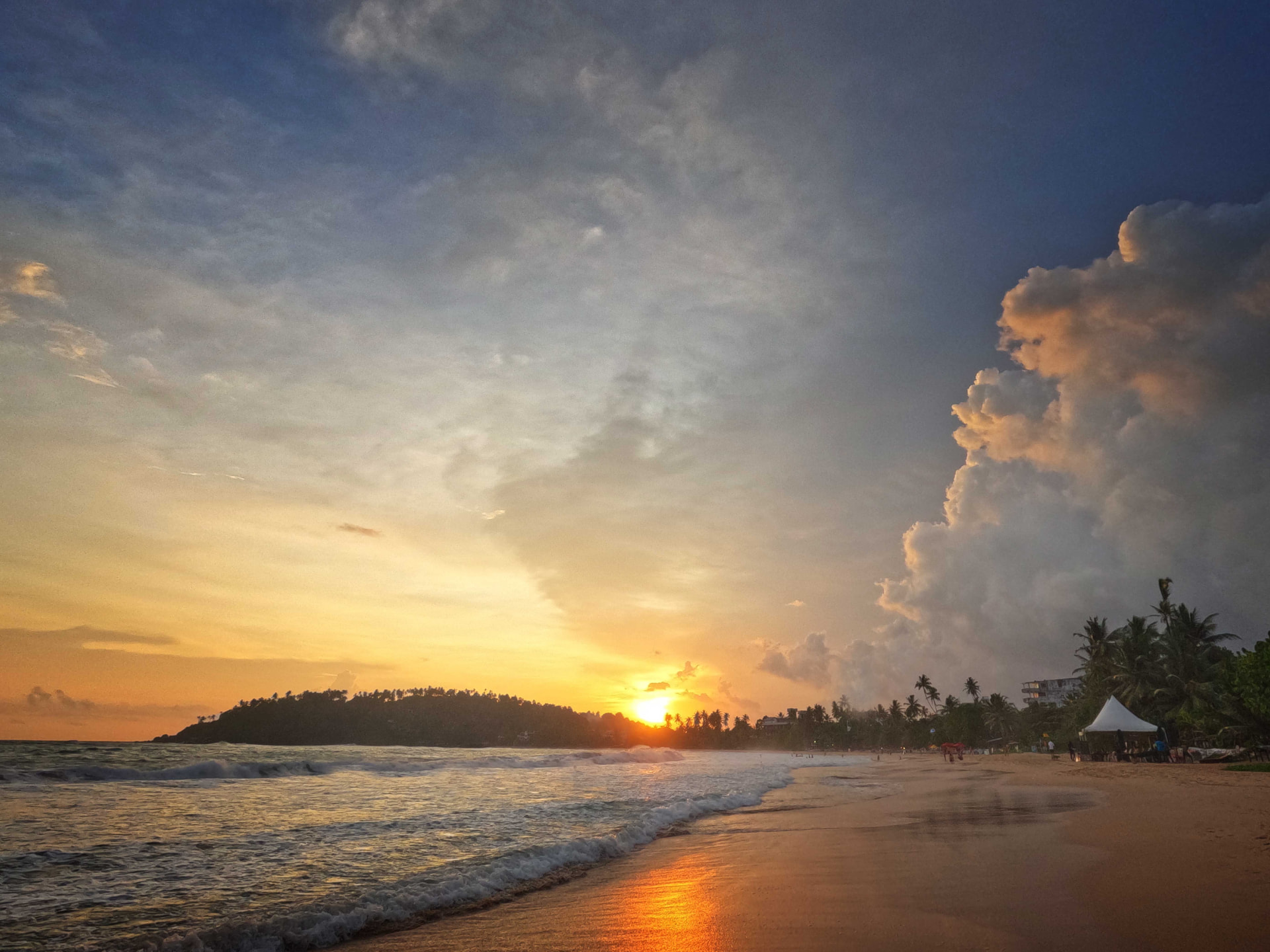
The boat leaves Mirissa harbour while the fishing fleet is still coming in, their catch glinting under deck lights. Out past the continental shelf, where the seabed drops away sharply just a few kilometres from shore, the water turns a deeper blue and the swells lengthen. This proximity of deep water to land is what makes Sri Lanka's south coast so unusual for whale watching — blue whales, the largest animals to have ever lived, pass remarkably close to shore on their migration. A blow on the horizon — a tall, single plume of vapour — is usually the first sign, followed by the long grey-blue back rolling at the surface for what feels like a full minute before the tail, if you are lucky, lifts clear of the water. Spinner dolphins often arrive in loose, playful pods of a hundred or more, leaping and turning alongside the boat's wake, a different register of encounter entirely — fast, social, curious. The best mornings are quiet ones: engines idling, no chatter, everyone facing the same stretch of water. Sperm whales occasionally surface in small family groups, distinguishable by their blunt heads and the angle of their blow. Whether or not a blue whale appears, the return to harbour past the stilt fishermen of Weligama, silhouetted at sunrise on their thin wooden poles, is its own quiet reward.
What to expect
- An early departure from Mirissa harbour, usually before 7am, while the sea is calmest.
- A steady run out to the continental shelf where the deep water begins.
- Slow, respectful approaches to any whales or dolphin pods sighted, at a legal and ethical distance.
- Time on open water watching for blows, dorsal fins and surface activity with the crew's guidance.
- A return past Weligama's stilt fishermen as the morning light strengthens.
Insider tips
- Take seasickness medication the night before if you're at all prone to it — the shelf waters can be swelly.
- Bring a hat, reef-safe sunscreen and a windbreaker; there's little shade once the boat is underway.
- Sightings are never guaranteed — choose an operator with a strong track record and small group sizes.
- Pack a dry bag for your camera; spray on the open deck is common even on calm days.
Good to know
- Duration
- Approximately 3 to 4 hours, departing early morning
- Difficulty
- Easy, though the open sea can be choppy — those prone to seasickness should take precautions
- Ideal for
- Couples, families and wildlife enthusiasts comfortable on a small boat
- Where
- Mirissa, on Sri Lanka's south coast
Best time
November to April, with December to March being the sweet spot.
Perfect for
- Couples
- Families
- Wildlife enthusiasts
Where to enjoy it
Pair withthese destinations
Include it
Add this to your journey
Our specialists will build this experience into a fully private Sri Lankan itinerary.